

Infrastructure Expansion: Progress, Challenges and Opportunities in the Railway Sector
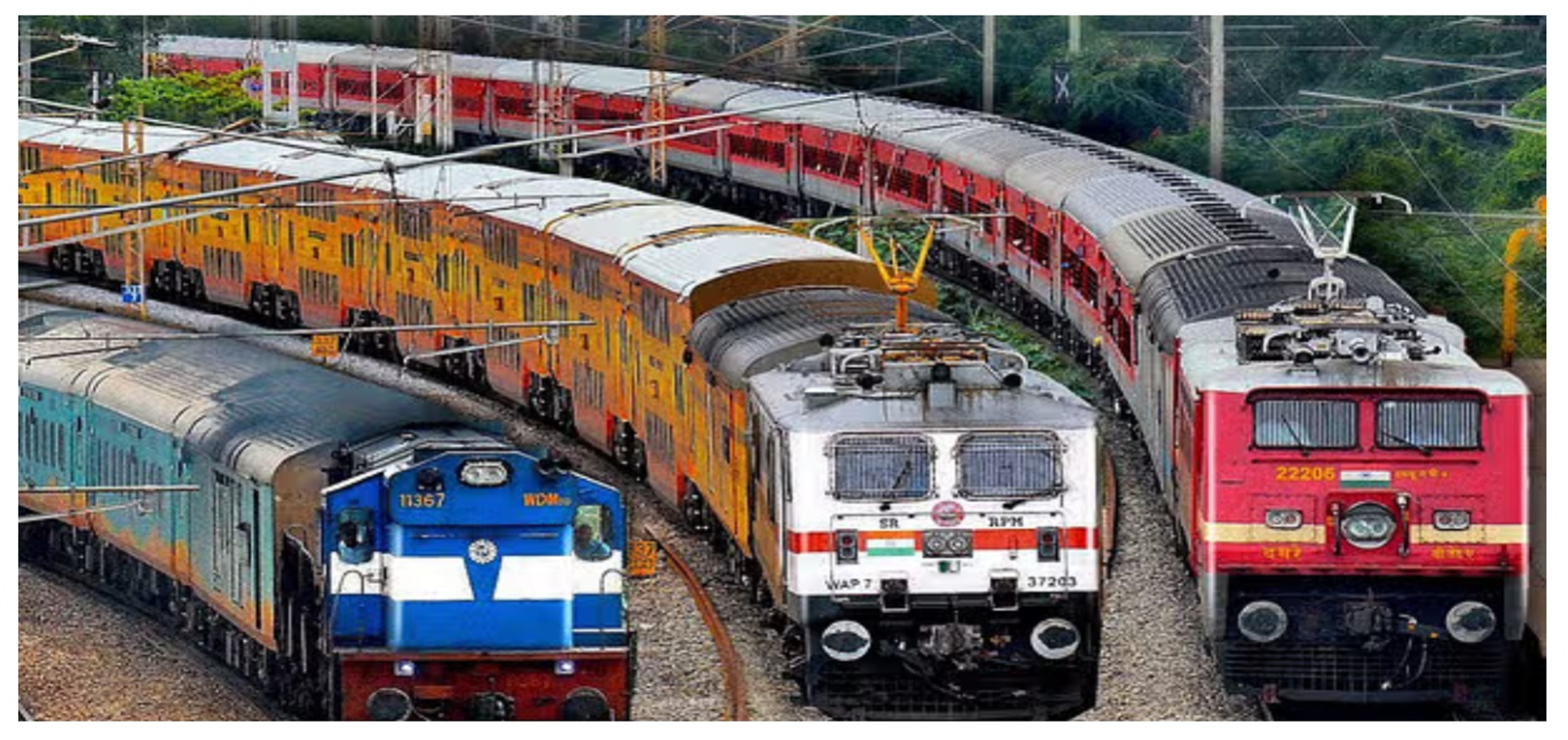
As India moves towards enhancing its infrastructure and driving economic growth, Indian Railways (IR) is on the brink of a significant transformation, powered by sustained high capex over the past few years, technological innovation and operational reforms. Infrastructure creation, such as track construction and station redevelopment, is expected to provide a fillip to IR’s objectives of achieving higher speeds for trains, improved passenger amenities and robust freight performance. These initiatives, coupled with a focus on streamlining governance, are empowering the Railway Board (RB) and fostering operational flexibility, which bodes well for the future of the national transporter.
Funding railway growth
The Union Budget 2025-26 sets a clear direction for the railway sector, with a significant focus on infrastructure creation and reducing reliance on external budgetary support. The gross budgetary support allocation has nearly quadrupled since 2019-20, signalling a shift towards fiscal prudence by reducing the reliance on internal and extra budgetary resources (IEBR). Of the total allocation for 2025-26, a relatively small portion is being provided through IEBR, while the railway’s capex outlay has almost doubled over the past five years, reaching around Rs 2,652 billion in 2025-26 and maintaining this high level for continued growth.
A major focus has been placed on creating track infrastructure with a large allocation earmarked for new lines, doubling, track renewals, gauge conversion, signalling and telecommunication, and electrification. In addition, a substantial amount has been set aside for rolling stock, reflecting the emphasis on modernising assets and supporting both passenger and freight expansion.
Tracking the performance of key segments
IR’s performance has shown improvements, driven by higher freight and passenger traffic in recent years. During April-December 2024, originating passenger traffic grew strongly and freight revenue increased by over 5 per cent compared to the previous year, with freight continuing to play a dominant role in IR’s revenue mix. Total revenue during this period was close to Rs 1.93 trillion, with the freight segment contributing the largest share and passenger earnings also rising.
Freight loading recorded growth to about 1,179 million tonnes during April-December 2024, while the Ministry of Railways achieved capex utilisation of around 76 per cent, indicating strong execution. Capacity augmentation, rolling stock procurement, safety-related works and passenger amenities together accounted for a major part of this expenditure profile.
Increasing focus on capacity expansion
Capacity expansion through track construction and enhancement of rail infrastructure has been one of the most significant growth areas. Total capacity addition has more than doubled over the past five years, rising from around 2,226 km in 2019-20 to 5,309 km in 2023-24, driven by extensive multitracking initiatives. During April-December 2024 alone, about 3,433 km of tracks were commissioned, including new lines, doubling and gauge conversion, with an impressive average daily track laying rate.
IR is targeting about 5,500 km of new track addition in 2024-25 at a pace of around 15 km per day, alongside the replacement of roughly 7,000 km of old tracks annually. This accelerated expansion has helped ease congestion and enabled higher train speeds, with around 23,000 track km now fit for 130 kmph operations and more than 54,000 track km capable of 110 kmph running.
Infrastructure expansion through new divisions
To support rising demand and improve regional connectivity, new divisions and zones are being created. In January 2025, the new Jammu railway division was inaugurated, covering about 742 km and key sections such as Pathankot-Jammu-Udhampur-Srinagar-Baramulla and other connecting branches, which is expected to enhance operational efficiency across Jammu & Kashmir. In the same month, the foundation stone for the South Coast Railway zone’s headquarters in Visakhapatnam was laid, boosting connectivity to major ports such as Visakhapatnam, Kakinada and Krishnapatnam.
The government also plans to merge Konkan Railway Corporation Limited (KRCL) with IR to streamline services along the western coastal belt. As part of this merger, IR is expected to provide capital support for essential infrastructure upgrades, addressing KRCL’s financial constraints. The Karnataka government has already approved the merger and discussions are under way regarding exit options for stakeholders.
Safety measures and technological upgrades
Safety continues to be a top priority, with significant investments in modern safety systems and digital technologies. Electronic interlocking (EI) has been rolled out to thousands of stations, with hundreds more added during 2024-25 and mechanical signalling progressively removed on high-density routes. Automatic block signalling has also been expanded on key corridors, improving headway and line capacity.
The indigenous automatic train protection system, Kavach, has received sizeable investments for deployment across critical routes. By late 2024, several thousand kilometres of optical fibre cable, telecom towers, trackside equipment and locomotives had been equipped with Kavach, along with hundreds of stations. IR has also announced plans to implement an integrated track monitoring system (ITMS) across all zones, using contactless technologies such as laser sensors, high-speed cameras and LiDAR to cut the rail track health review cycle from four months to about two months.
Challenges plaguing the sector
Despite rapid progress, the sector faces structural challenges, including slow expansion of overall route length, connectivity gaps at the first and last mile, import dependence and project delays. A large share of recent capacity addition has come from doubling, tripling and gauge conversion, which increases track capacity but does not significantly expand the network’s geographical reach, leading to slower growth in net rail coverage compared to total track km.
IR also faces competition from the road sector, which has expanded at more than twice the rate of rail and offers better point-to-point connectivity. Efforts to bring in private investment have met limited success due to perceived high risks and modest returns, while land acquisition, reliance on imported technologies (such as forged wheels and certain control systems) and external geopolitical risks continue to cause delays.
Efforts to streamline operations and governance
IR is working to refine its financial practices, O&M policies and project governance to support sustainable growth. A major step in this direction was the passage of the Railways (Amendment) Bill, 2024, which aims to streamline governance by decentralising powers and granting more autonomy and operational flexibility to the Railway Board. The amendment merges earlier legislation into a simplified framework and empowers the government to define the board’s composition.
An independent regulator is to be appointed to oversee tariffs, safety and competitiveness, with the goal of faster approval and implementation of train services and projects. The Railway Board has also outlined plans to grant greater authority to PSUs for the O&M of new depots, sheds, workshops and rolling stock under specified conditions, including maintenance standards, safety audits and performance-based contract termination clauses, covering more than 700 workshops and 300 depots across the network.
IR is additionally shifting to an accrual-based accounting system across all zones for 2024-25, enhancing financial transparency and facilitating access to multilateral and green financing. Operationally, the Board has introduced policies such as a power car maintenance framework, aligning maintenance contracts with OEM standards and kit-based maintenance to improve reliability of onboard power systems.
Future prospects and potential private sector participation
IR operates around 18,000 trains daily, including approximately 8,000 freight trains, and is implementing multiple initiatives to increase freight share and overall revenues. Freight trains on dedicated freight corridors already operate at nearly double the speed of those on conventional routes, and the development of around 200 Gati Shakti cargo terminals with significant investment is expected to further boost freight handling capacity; nearly half of these terminals have already been commissioned.
However, achieving the ambitious freight loading target of around 3,000 million tonnes by 2030 will require freight traffic to grow at a rate much higher than recent historical trends. To support this, the government is opening more PPP opportunities by sharing select data from the PM Gati Shakti portal, outlining a three-year PPP project pipeline, and planning PPP-based development of commercial freight corridors such as mineral transportation routes with multi-trillion-rupee investments.
The shift towards the EPC model for station redevelopment has created sizeable opportunities for contractors, with works already awarded for the majority of planned stations. With comprehensive reforms, sustained infrastructure expansion, safety and technology upgrades, and a more enabling framework for private participation, Indian Railways is positioning itself for a new era of growth and operational excellence.