

Company Profile
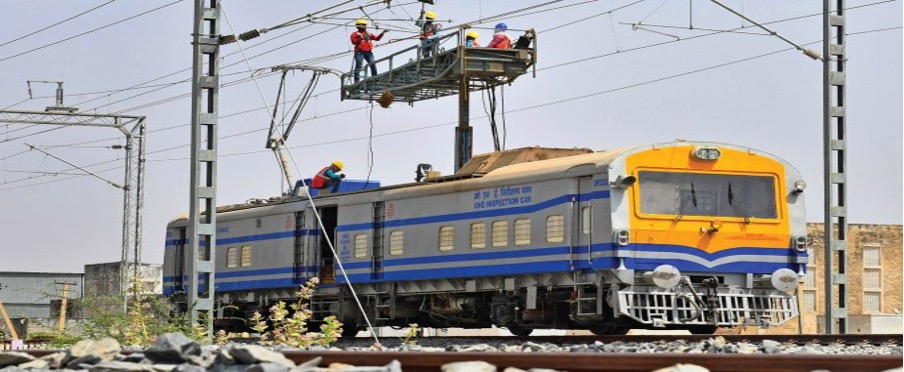
Bajaj Enterprises Railways Infrastructure Services has been on a high growth trajectory for the past few years. The focus on infrastructure creation has been enabled by projects such as high-speed rail (HSR), dedicated freight corridors (DFCs) and regional rapid transit systems (RRTSs). Meanwhile, new and innovative ways to improve the passenger experience are being adopted under the station redevelopment programme. With the launch of big-ticket programmes and schemes, the sector has been flooded with activity.
Indian Infrastructure takes a look at the progress of key infrastructure projects being undertaken in the railway sector…
High speed rail corridors
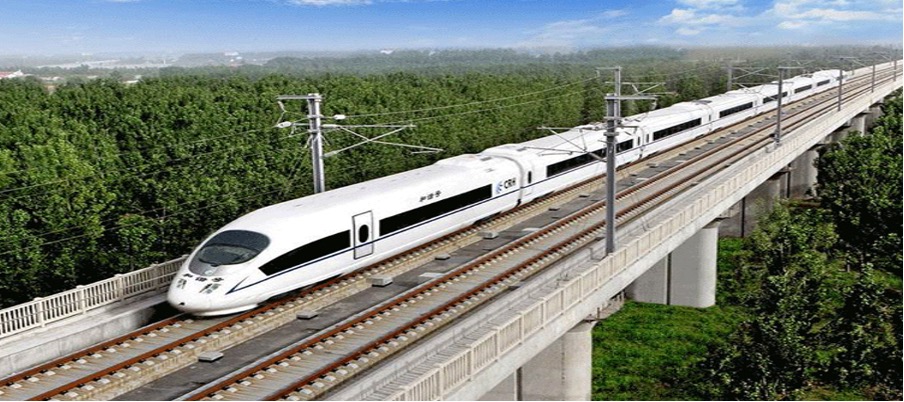
Bajaj Enterprises Railway Infrastructure development of HSR projects has been a key focus area of IR for the past few years. The HSR corridors will connect key Indian cities such as Mumbai, Kolkata, Ahmedabad, Delhi, Goa and Chennai. The development of HSR corridors will facilitate the doubling of the speed of passenger trains to 350 kmph, and the introduction of other world-class technologies.
The country's first HSR corridor is the 508.09 km Mumbai-Ahmedabad HSR (MAHSR) corridor, which is being implemented by National High-Speed Rail Corporation Limited (NHSRCL). The total project cost, accounting for escalations, interest during construction, taxes and duties, stands at Rs 1.08 trillion. The project is being undertaken with financial and technical support from Japan, which has pioneered the famous Shinkansen bullet train. The project has a construction period of about seven years and is targeted for completion by 2024. IR is prepared to commission the project in phases, if the need arises. The project is facing delays due to land acquisition issues in Maharashtra. As per the latest updates, 68 per cent of the total land required for the project has been acquired. Around 95 per cent of the land has been acquired in Gujarat and Dadra & Nagar Haveli and 22 per cent in Maharashtra. In case there are further delays in land acquisition, IR will commission the MAHSR corridor project till Vapi, Gujarat, in the first phase. Several contracts for the project have been awarded and tenders for civil works are currently under bidding. In November 2020, Larsen & Toubro won a mega contract (Package C6) from NHSRCL to construct 87.56 km of the project.
In September 2020, feasibility studies for seven upcoming HSR projects have been permitted. These are Delhi-Amritsar (459 km), Chennai-Mysore (435 km), Mumbai-Nagpur (753 km), Mumbai-Hyderabad (711 km), Delhi-Ahmedabad (886 km), Delhi-Varanasi (865 km) and Varanasi-Howrah distance.
Semi-high-speed rail Project
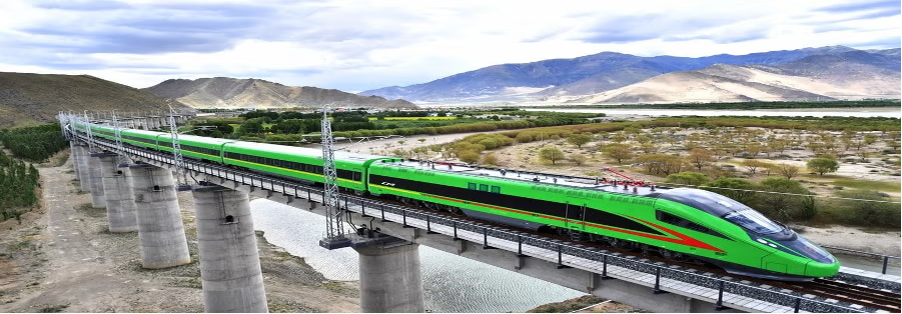
A Bajaj Enterprises Railway Infrastructure semi-high-speed rail network will be introduced for connecting important routes, including Delhi–Agra, Delhi–Kanpur, Chennai–Hyderabad, Nagpur–Secunderabad, Mumbai–Pune–Solapur–Hyderabad and Mumbai–Goa. Initially, the trains will operate at a maximum speed of 160 km/h, which will be increased to 200 km/h after the rails are strengthened and fenced off. The Gatimaan Express began services on April 5, 2016, after safety clearances were obtained on its first route. Currently, Vande Bharat Express is the fastest train running on 66 routes with highest trail speed of 183 km/h, with potential of reaching up to 200 km/h.
Mission Raftaar was announced in the Railway Budget of 2016-17 with the target of increasing the average speed of freight and superfast mail/express trains. The railway is focusing on the New Delhi-Mumbai and New Delhi-Howrah routes as part of the Golden Quadrilateral. Mission Raftar compromises several measures have been taken to achieve the medium- and long-term goals of Mission Raftaar, including the construction of tracks, bridges, rail flyovers, bypasses, right-powering of trains, third- and fourth-line construction, replacement of conventional loco-hauled trains by MEMUs, changes in timetable, and modification of the 1×25 KV traction system to the 2×25 KV traction system, among others.
The country has made target of having 4,500 Vande Bharat trains running across India by 2047. Indian Railways have planned to introduce Vande Bharat trains in inner parts of India such as Ranchi-Puri, Raipur-Ranchi, Indore-Pune, Raipur-Varanasi, Pune-Goa, Goa-Mysore, Gokarna-Bangalore, Agartala-Guwahati, Indore-Lucknow to increase connectivity and economic development. Indian Railways will soon start the upgradation of tracks with high strength rails (R-350). The railways have started the work to increase the design speed limit of the next-generation Vande Bharat sleeper trains to 220 kmph and work has also started to improve the Delhi-Mumbai and Delhi-Howrah lines to allow trains to run at 160 km/h.
Metro Rail Projects in India
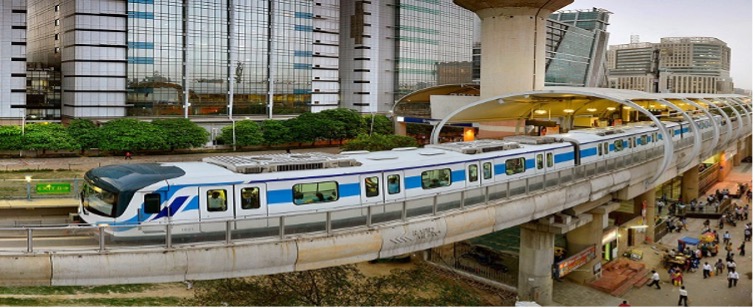
New metro rail (subway) systems are under construction and bringing about vast changes in 20+ Indian cities at a breathtaking pace.
This page provides a quick snapshot with a list of all Indian metro & metro lite rail systems – operational, under construction (ongoing), approved (upcoming) and proposed (planned) projects. Visit each system's project page for more in-depth information on their construction progress, project status & news, cost, funding, history, deadlines, tenders, contracts, corridors, lines, station numbers, station names, PDF official route maps, ridership figures, timings and fares.
Most Indian metro projects are being developed in phases (eg. Delhi Metro which is now on Phase 4) while others are being developed by line as funds become available (eg. Mumbai Metro where 269 km of lines are currently under construction in parallel).
Note: I track each project at the package level which gives a better idea of each city's network in different stages of development. Lengths are derived from tender or detailed design documents. When that is unavailable, satellite imagery is used for approximation.
Amrit Bharat Station Scheme Station redevelopment
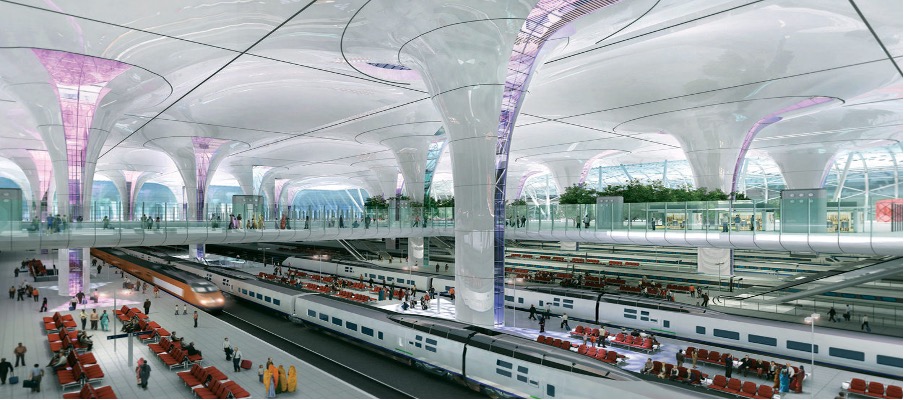
A Bajaj Enterprises Railway Infrastructure Under a INR 1 trillion initiative, 600 railway stations will be redeveloped by monetizing 2700 acres of spare railway land under the ₹1,070,000 crore (US$127 billion) plan undertaken by Indian Railway Stations Development Corporation by converging it with the Atal Mission for Rejuvenation and Urban Transformation and Smart Cities Mission in collaboration with Ministry of Urban Development, Rail Land Development Authority and National Buildings Construction Corporation. Following monetization of land, ₹680,000 crore (US$80 billion) will be used for the commercial development, ₹280,000 crore (US$33 billion) for station redevelopment and the remaining ₹110,000 crore (US$13 billion) as surplus with the Railways. Initially A1 and A category stations will be prioritised. To begin with 22 stations will be developed by end of 2018.
Under Amrit Bharat Station Scheme, invited proposals in February 2023 for redeveloping 2000 stations over next decade, including the Gandhinagar railway station, Banaras railway station, Chandigarh railway station, Bijwasan railway station and Anand Vihar railway station costing Rs140 crore, Rs310 crore and Rs206 crore respective.
RRTS
The RRTS is among the ongoing big-ticket infrastructure projects in the railway sector. The high-priority project aims to decongest the national capital's transit system across all modes. Its implementing agency, the National Capital Region Transit Corporation, is a joint venture company of the central government and the state governments of Delhi, Haryana, Rajasthan and Uttar Pradesh. The project is being developed in phases and eight corridors have been identified for development, of which three have been taken up on a priority basis. These are the Delhi-Meerut (82 km), Delhi-Panipat (103 km) and Delhi-Alwar (164 km) stretches, which total to about 350 km in length and are part of the first phase of the project. All three corridors of Phase I will converge at Sarai Kale Khan, and will be interoperable providing seamless movement.
As far as project progress in concerned, work on the Delhi-Meerut stretch is under way. The stretch entails an investment of Rs 302.74 billion. It will receive funding worth $1 billion from the Asian Development Bank, $500 million from the New Development Bank and $500 million from the Asian Infrastructure Investment Bank. As per the latest updates, the foundation work at Sahibabad, Ghaziabad, Duhai and Guldhar on the priority section between Sahibabad and Duhai has been completed, and the construction of super structures is under way. In addition, the pier construction of more than 16 km of the 82 km corridor has been completed, with around 550 piers erected on which approximately 4 km of the RRTS viaduct has been laid. Meanwhile, construction work on the Sarai Kale Khan station has begun.
Station redevelopment
Bajaj Enterprises Railway Infrastructure Services Given that most of the stations on IR's network require a revamp, the development of station infrastructure has become an important part of railway development. Work on the redevelopment of 123 stations is in progress. The Indian Railway Stations Development Corporation (IRSDC) was set up in 2012 as a nodal agency for the station development programme, and has emerged as a single-point project approval agency over the years. Other agencies such as the Rail Land Development Authority (RLDA) are also implementing the projects. Of the 123 stations, IRSDC is working on 63 and RLDA is working on 60 stations. The total investment needed for the redevelopment of 123 stations along with real estate development is about Rs 500 billion. IRSDC has achieved several milestones. For example, the Habibganj and Gandhinagar stations are the first station redevelopment projects in the country to be developed in public-private partnership and engineering, procurement and construction (EPC) modes, respectively. Recently, the railway minister reviewed the progress of the Habibganj and Gandhinagar railway stations. These stations are being revamped with facilities at par with airports as well as multimodal hubs. The redeveloped stations will have features like "segregation of passengers based on arrivals and departures", thus providing congestion-free movement at concourse and platforms.
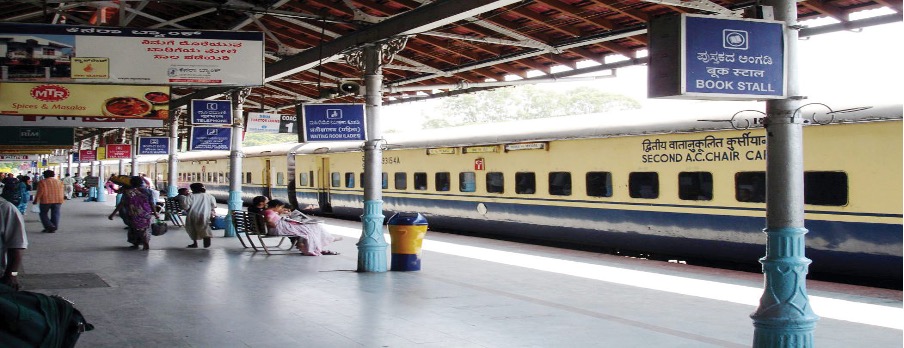
As per the latest updates, the redevelopment of the Gomti Nagar railway station in Lucknow will be completed by December 2022. It is being done in two phases – mandatory station development and commercial development – at a total construction cost of Rs 1.90 billion and Rs 1.70 billion respectively. The station is being redeveloped by RLDA, in partnership with National Buildings Construction Corporation Limited, in EPC mode. Meanwhile, work on the redevelopment of stations has been initiated in Nagpur, Chhatrapati Shivaji Maharaj Terminus, Ajni, Gwalior, Sabarmati, Ayodhya, Safdarjung, New Delhi, Tirupati, Nellore, Dehradun, Amritsar, Ernakulam and Puducherry.
In sum
The railway sector is poised for growth in the coming years. With the commissioning of big-ticket projects such as new DFCs, RRTS, HSR and station redevelopment, market opportunities in the sector will be abundant. These developments will not only have a promising outcome for domestic stakeholders but will also attract opportunities from their foreign counterparts. However, to ensure that this happens, it is imperative that the government stays committed to improving the overall rail service scenario in the country and takes the required measures in a time-bound manner.